
You can own a historic home in Madison, GA and still have modern HVAC, updated kitchens, and smart-home systems, but exterior changes require approval from the Historic Preservation Commission. Knowing the review process before you buy protects both your investment and your renovation timeline.
Can you modernize a historic home in Madison, GA without losing its character?
Yes, most modern comforts can be added to a historic Madison home without compromising its historic designation, as long as interior work stays interior. Exterior changes (windows, siding, porches, additions) require a Certificate of Appropriateness from Madison's Historic Preservation Commission before work begins. Buyers who understand this process before they make an offer are the ones who close without surprises and renovate without delays.
Key Takeaways
- Madison's Historic District includes 356 contributing buildings, from early Federal-style cottages to grand antebellum brick residences, one of the most intact historic housing inventories in Georgia.
- Recent local market data puts the Madison area median sale price at $490,000, with a median of 59 days on market, based on trailing 90-day aggregated public listing data as of September 2026.
- Interior modernization (central HVAC, updated kitchens, smart-home systems) is generally permitted inside historic homes. It's exterior changes that trigger the Certificate of Appropriateness review.
- Madison's status as an active heritage tourism destination supports long-term demand for well-maintained historic homes in a way most markets simply can't match.
- Buyers planning renovations do best when they bring in a local architect and an experienced historic contractor before going under contract, not after.
What makes Madison's historic homes different from other Lake Country properties?
Here's the short version: Madison didn't burn during Sherman's March. That one fact is why you can still walk down a downtown street and see original antebellum architecture that was never reconstructed, never replicated, just quietly maintained for nearly two centuries.
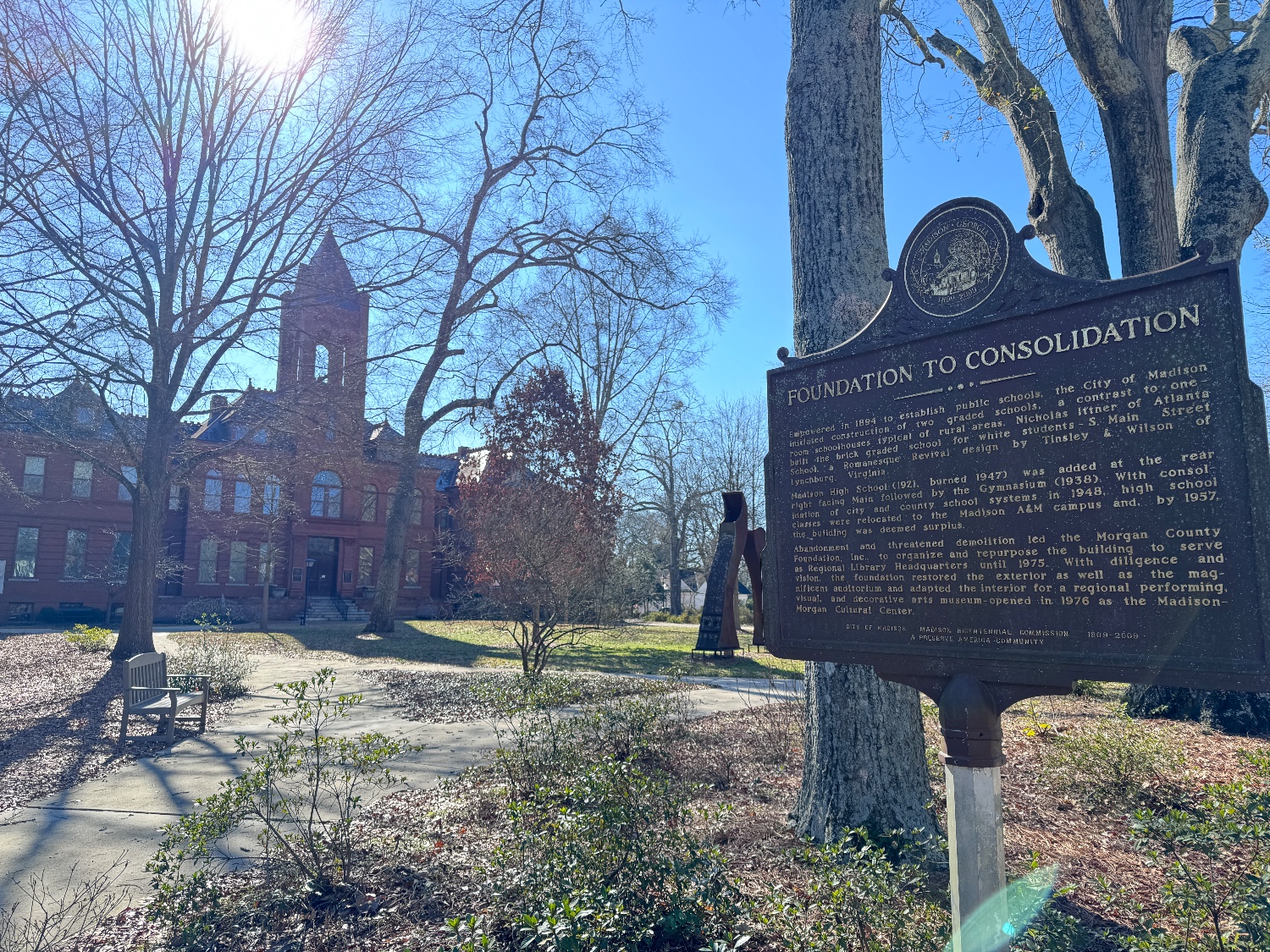
The Rogers House (1809), Bonar Hall (1839), the Carter-Newton House (circa 1849), these aren't museum pieces. People buy them, renovate them, and live in them. The district has 356 contributing buildings, which means this is a real neighborhood, not a handful of showpiece properties roped off from the world.
The styles range from early Federal and Georgian frame cottages to Greek Revival and late-Victorian residences. A lot of them have already been quietly modernized on the inside, new HVAC, updated kitchens, renovated baths, while their original facades and porches stayed exactly as they were. That's the model. And honestly, it works beautifully.
If you want to understand how Madison's historic core fits into the bigger growth story for the area, I've written more about that at Madison GA Historic Downtown: Charm Meets Growth.
How does the Madison market compare to nearby Georgia's Lake Country areas?
Here's a quick look at where things stand across the area, based on trailing 90-day aggregated public listing figures as of September 2026. Individual homes vary by condition, street, build year, and timing.
| Area | Median Sale Price | Median Days on Market |
|---|---|---|
| Madison | $490,000 | 59 |
| Rutledge | $625,000 | 61 |
| Greensboro | $758,450 | 49 |
| Eatonton | $400,000 | 52 |
Madison sits right in the middle of this range at $490,000. A Morgan County market report from May 2025 showed a median sold price of $494,250, up 8.9% year-over-year (via Rocket Homes). That earlier number lines up closely with where things are now, which tells me this is steady demand, not a spike.
A big part of that demand comes from Atlanta and other metro buyers who want historic character, walkable small-town life, and easy access to Lake Oconee. That regional buyer pool is a real advantage for Madison historic homes, because it means you're not dependent on local employment alone to find your next buyer.
So what does the historic district review process actually involve?
Less than most people fear, once you understand what actually triggers a review.
Interior work vs. exterior work: the line that matters
Want to gut the kitchen, add central air, or wire the whole house for smart home? Go for it. None of that touches the Commission's radar. Interior renovations are yours to do as you see fit, and plenty of Madison historic homes have already had full modern system overhauls behind their original walls.
Exterior changes are where the review comes in. Anything visible from the street, replacing windows, changing siding, modifying a porch, adding a dormer or a garage, requires a Certificate of Appropriateness before work starts. The Georgia Department of Community Affairs framework for historic district design guidelines makes clear that this process is about maintaining architectural character, not freezing homes in time.
In practice, that usually means:
- Replacement windows that match original profiles tend to sail through. Vinyl snap-ins don't.
- A rear addition that sits back from the primary facade and reads as secondary to the original structure can absolutely be approved.
- Updated electrical, plumbing, and HVAC are interior work. No review needed.
The Georgia Mountains Regional Commission's preservation guidance reinforces this, noting that regional commissions help local bodies like Madison's determine what's appropriate for their specific district, which is why Madison's standards are tailored to Madison, not a generic statewide checklist.
What the Certificate of Appropriateness process looks like in practice
You'll submit a project description with supporting materials (drawings, photos, material samples) to the Commission. They apply Madison's local guidelines alongside National Park Service rehabilitation standards to evaluate the proposal.
The most important thing I tell buyers: build the review timeline into your project schedule before you close. If you're already thinking about exterior work, start a preliminary conversation with the Commission or a local preservation architect early, ideally before you're even under contract. That's what keeps a renovation on track instead of stalled.
Straightforward projects that fit within pre-approved parameters can move relatively quickly. Complex additions or unusual material choices take longer. Either way, a local architect who knows Madison's guidelines and a contractor experienced with historic materials are the two people who make the biggest difference in how smoothly it goes.
Why does a Madison historic home hold its value so well?
Here's the thing about buying in Madison's historic district: newer construction just can't compete on this.
Supply is genuinely fixed. You can build a new home almost anywhere in Morgan County, but you cannot build a new 1839 antebellum residence. The 356 contributing buildings in the district are the inventory, full stop. That scarcity, combined with the city actively promoting the historic district as a heritage tourism destination, creates a demand floor that a subdivision on the county's edge simply doesn't have.
There's also something to be said for the preservation framework as a form of neighborhood protection. The same review process that applies to your renovations applies to your neighbors'. That's a constraint, yes, but it's also what keeps the character of the street intact for the long haul, and character is what buyers are paying for.
At the individual home level, condition is everything. A well-maintained historic home with updated systems, a sound roof, and original details intact will attract a much broader buyer pool than one with deferred maintenance. Where your specific home lands depends on the property itself, its street, its build year, and market timing. That's exactly why I'd suggest a current comparative market analysis before you price or offer on anything.
And if you're thinking about this market long-term, it's worth reading about the Rivian plant's impact on Morgan County real estate. Economic growth in the county expands the buyer base for all Madison properties, historic ones included.
Frequently Asked Questions
What renovations require approval from Madison's Historic Preservation Commission?
Any exterior alteration visible from a public way requires a Certificate of Appropriateness before work begins, this includes replacing windows, changing siding, modifying porches, and building additions or garages. Interior work such as HVAC, electrical, plumbing, kitchen and bath renovations, and smart-home systems generally does not require Commission approval, since the review process focuses on maintaining the district's visible architectural character.
Can I add a modern primary suite or garage to a Madison historic home?
Yes, additions are possible in Madison's Historic District, but they need to be designed as subordinate to the original structure, typically set back from the primary facade, compatible in scale, and using materials that don't compete with the historic exterior. A rear addition that reads as clearly secondary to the original home is far more likely to receive a Certificate of Appropriateness than one that changes the street-facing character of the property. Getting a local architect involved before you design is the practical first step.
How do Madison's historic district guidelines handle replacement windows and siding?
Madison's guidelines, informed by National Park Service rehabilitation standards and the Georgia DCA's historic district design framework, generally require that replacement windows match the profile, operation, and material character of the originals. Wood or approved composite materials are typically preferred over vinyl. Siding replacements that cover or remove original historic fabric are usually not approved; repair of existing material is the preferred approach. The specifics depend on the individual property and the Commission's current standards.
Are historic homes in Madison more expensive, and how long do they take to sell?
Recent local market data shows a Madison area median sale price of $490,000 and a median of 59 days on market, based on trailing 90-day aggregated figures as of September 2026. Historic district homes vary widely depending on size, condition, and whether systems have been updated. The best way to understand where a specific property sits is a current comparative market analysis.
Will a historic designation limit modern amenities like HVAC, updated kitchens, or smart-home systems?
No, the historic designation governs exterior appearance, not interior function. Central HVAC (including mini-split systems that avoid ductwork through historic walls), fully updated kitchens and baths, smart-home wiring, and modern appliances are all compatible with historic district ownership in Madison. Many homes in the district have already had these systems installed. The key is routing modern infrastructure in ways that don't damage historic fabric, which is where an experienced historic contractor earns their fee.
Owning a historic home in Madison rewards the buyers who come in prepared. Know the review process, have the right professionals lined up, and understand the market before you make an offer, and it becomes one of the most satisfying purchases I've seen clients make.
If you want to explore what's available in Madison's Historic District, or just talk through what a specific property's renovation scope might realistically look like, I'd love to walk you through it. Schedule a consultation with me here and let's find the right historic home for you.
Equal Housing Opportunity. Scarlet Torok is a licensed Realtor regulated by the Georgia Real Estate Commission. This article is general information only, not legal, tax, or financial advice. Confirm your own numbers and renovation requirements with your closing agent, tax advisor, lender, and the Madison Historic Preservation Commission.
Check out this article next