

How does Madison, GA preserve its historic downtown while still growing?
Madison's historic downtown survives and thrives because the community treats preservation as an economic strategy, not just a sentimental one. The Historic District is listed on the National Register of Historic Places and contains more than 100 contributing buildings, many dating from the early 1800s through 1910. State and federal rehabilitation tax credits, the Georgia Main Street Program, and active civic institutions keep that streetscape intact even as Georgia's Lake Country draws new residents and visitors every year.
What Makes Madison's Downtown So Rare
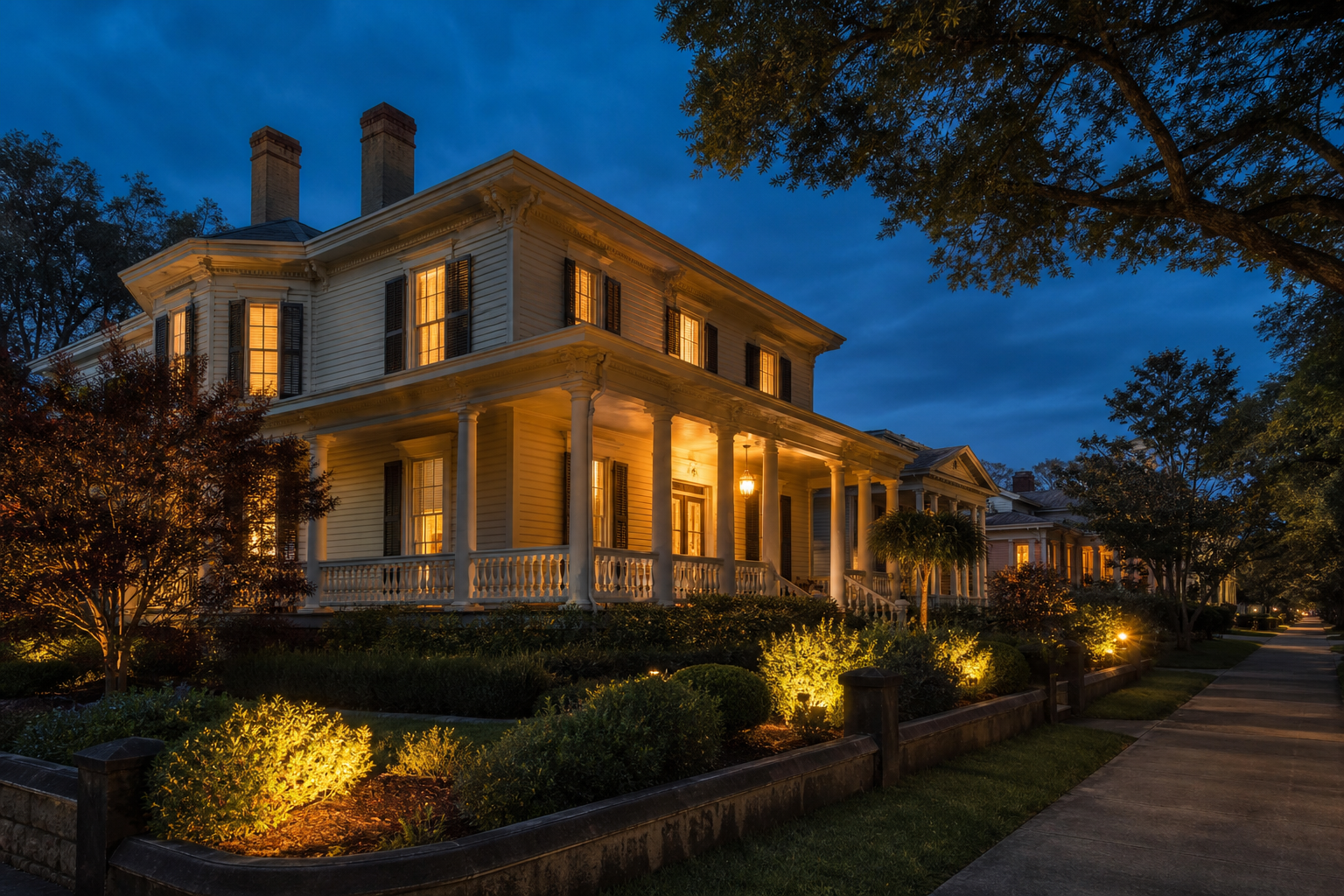
You've probably heard the story: Madison is often called "the town Sherman refused to burn." Whether the full legend holds up to every historian's scrutiny or not, the result is real. Walk down Main Street today and you move through a continuous 19th-century townscape, not a single landmark surrounded by parking lots and chain stores.
The Georgia Trust for Historic Preservation recognizes the Madison Historic District for its concentration of Italianate, Neoclassical, and Victorian commercial storefronts alongside nearby Antebellum homes. That variety, spread across more than 100 contributing buildings, is what makes it feel like a living neighborhood rather than a museum exhibit.
I've been working in this market for more than 25 years, and I still get clients who drive through downtown for the first time and say they didn't expect it to feel this intact. That's not an accident. It's the result of deliberate policy choices made over decades.
The Streetscape as a Cohesive Experience
What separates Madison from towns that have one or two notable old buildings is the continuity. Residential streets lined with Antebellum houses sit within walking distance of the commercial core, so visitors and residents move through the same visual grammar the whole time they're downtown. According to the Georgia Trust, that cohesion is precisely what makes the district significant.
Downtown storefronts today house restaurants, coffee shops, boutiques, galleries, law offices, and real estate offices. The interiors are modern. The Wi-Fi works. But the facades, the proportions, the materials, those stay. That balance is what Explore Georgia and Georgia's Lake Country marketing consistently highlight when positioning Madison as a heritage tourism destination alongside Lake Oconee and Lake Sinclair.
The Tools That Keep Preservation Working
State and Federal Historic Tax Credits
One of the most practical preservation tools available to downtown property owners is the historic rehabilitation tax credit. The NPS Historic Tax Credit program and Georgia's own incentives through the Georgia Department of Community Affairs Historic Preservation Division allow owners of qualifying income-producing properties to modernize interiors, think new HVAC systems, updated electrical, accessibility improvements, while keeping historic exteriors intact.
The key is that any work done in pursuit of those credits must meet the Secretary of the Interior's Standards for Rehabilitation. Interior changes that don't affect the exterior typically go through a standard building permit process. But once a property owner wants to capture the tax credit, they coordinate with preservation officials to document that the work respects the historic fabric. It adds a step, but for many owners the financial benefit makes it worthwhile.
If you're considering purchasing or renovating a historic commercial property in Madison, the credit structure is one of the first things worth understanding. Your specific situation depends on the property's contributing status, the scope of work, and how you structure ownership, which is exactly the kind of conversation to have with a local advisor who knows this district.
The Georgia Main Street Program
Madison participates in the Georgia Main Street Program, administered by the Georgia Department of Community Affairs. The program's statewide track record shows that participating communities have collectively leveraged millions in public and private investment into historic downtowns, demonstrating that preservation and economic development are pursued as partners, not competitors.
That framing matters. When a new business wants to open in downtown Madison, the goal isn't to keep things frozen. It's to make sure the investment respects the streetscape that draws people there in the first place.
Community Institutions as Preservation Anchors
Policy tools work better when the community actively supports them. The Madison-Morgan Cultural Center, local historical societies, and civic groups host exhibitions, lectures, and preservation advocacy year-round. They reinforce downtown's role as the cultural heart of Lake Country, not just a commercial strip.
That civic identity shapes how residents respond to new development proposals. Local narratives consistently emphasize that Madison's historic district survived intact and has been deliberately protected ever since. New development tends to earn community acceptance when it uses design elements that echo the historic streetscape and respects that long continuity, per the National Park Service's recognition of the district.
Growth Context: Why Madison Can Handle It
Georgia's Lake Country is growing. The U.S. Census Bureau's 2020 Decennial Census put Morgan County's population at 20,605, up roughly 15% from 17,871 in 2010. Madison itself grew from 3,636 to 4,447 over the same period, according to Census Bureau data for Madison city, GA. Those are the most recent official decennial figures as of August 2026, and local observation confirms growth has continued.
The broader national picture adds context. As of summer 2026, NAR's Summer 2026 Real Estate Market report shows housing inventory running about 20% higher than a year earlier, with price growth moderating and affordability improving. The NAR 2026 Real Estate Outlook projects a modest 14% increase in home sales nationally and roughly 2-3% price growth for the year, a gradual rebound, not a speculative boom.
That environment actually works in Madison's favor. Small historic towns attract in-migrants who are drawn to quality of life and character, not just price appreciation. The extreme speculative pressure of 2021-2022 has eased, which gives communities like Madison more room to manage growth thoughtfully rather than reactively.
Lake Oconee's continued resort and second-home development, documented by Visit Lake Oconee, brings a steady stream of visitors and potential residents who stop in Madison's downtown when they're not on the water. That foot traffic supports the independent shops and restaurants that make the streetscape feel alive, which in turn reinforces the case for preservation investment.
| Indicator | Detail | Source |
|---|---|---|
| Contributing buildings in Historic District | 100+ buildings, early 1800s–1910 | NPS / Georgia Trust |
| Morgan County population (2020 Census) | 20,605 (up ~15% from 2010) | U.S. Census Bureau |
| Madison city population (2020 Census) | 4,447 (up from 3,636 in 2010) | U.S. Census Bureau |
| National housing inventory change (summer 2026) | ~20% higher than a year prior | NAR Summer 2026 Market Report |
| Projected national home sales increase (2026) | ~14% | NAR 2026 Real Estate Outlook |
Seasonal Rhythms Worth Knowing
If you're thinking about property in or near Madison's historic downtown, timing matters in ways that go beyond the transaction calendar. Fall (roughly September through November) is typically peak visitation for Madison and Georgia's Lake Country, when heritage tourists combine downtown touring with lake activities and foliage, per Explore Georgia's seasonal guides. Downtown shops and restaurants see their highest foot traffic during that window, which matters if you're evaluating a commercial property's revenue potential.
Spring often brings home and garden tours or heritage events in Madison's historic residential districts, with downtown serving as a hub for ticketing, dining, and shopping. The Georgia Trust's events calendar is a good place to track what's coming up. These events underscore something I tell every buyer or investor who asks me about downtown Madison: the preservation isn't just aesthetic. It's actively marketed and economically supported.
If you're curious about what else makes Morgan County worth exploring beyond the downtown core, the Hard Labor Creek State Park post on my site gives a good feel for the natural assets that round out the area's appeal.
What This Means If You're Buying or Investing Here
Deep local knowledge of Madison and the Lake Country is what actually protects my clients' interests, and nowhere is that more true than in the historic district. A property inside the National Register boundaries carries both opportunity and responsibility. The opportunity is real: tax credits, tourism-driven foot traffic, a built-in identity that no amount of marketing budget can manufacture. The responsibility is equally real: design review, Secretary of the Interior's Standards compliance if you pursue credits, and specialized trades for historic materials like masonry and wood windows.
Buyers sometimes underestimate how different the renovation calculus is for a contributing building versus a standard commercial property. The cost categories shift. Specialized masonry work, historically appropriate window restoration, and HPC-compliant design fees are part of the budget conversation in ways they wouldn't be elsewhere. That doesn't make it a bad investment, far from it, but it does mean you need someone in your corner who understands how those pieces fit together in Madison specifically.
Every situation is different, and the only way to know whether a specific property pencils out for your goals is to work through the details with someone who knows this market. That's exactly the kind of conversation I have with buyers and investors before we ever make an offer.
Frequently Asked Questions
Can I modernize the interior of a historic building in Madison without affecting its historic status?
Yes, in most cases. Interior work that doesn't alter the exterior appearance, such as HVAC upgrades, electrical modernization, or accessibility improvements, typically goes through a standard building permit process with the city rather than triggering historic review. If you want to pursue state or federal historic rehabilitation tax credits for the project, you'll coordinate with preservation officials to confirm the work meets the Secretary of the Interior's Standards, but that coordination is designed to help owners modernize responsibly, not block them from doing so.
Are there tax credits or incentives for preserving or renovating a historic building in Madison's downtown?
Yes. Qualifying income-producing properties in Madison's Historic District may be eligible for both the federal Historic Tax Credit and Georgia's own rehabilitation incentives, administered through the Georgia DCA Historic Preservation Division. These credits are designed to offset the cost of preserving historic fabric while bringing a building up to modern code and use standards. Eligibility depends on the property's contributing status, the scope of work, and how the project is structured, confirm specifics with a tax advisor and preservation consultant familiar with Georgia's program.
What is the Georgia Main Street Program, and how does it benefit Madison?
The Georgia Main Street Program is a state initiative through the Georgia Department of Community Affairs that helps participating communities attract private and public investment into historic downtowns. Madison's participation means the city has access to technical assistance, design guidance, and a framework that treats preservation and economic development as complementary goals. Statewide, participating communities have collectively leveraged millions in investment into their historic cores since the program's inception.
How does growth around Lake Oconee affect Madison's historic downtown?
Resort and second-home development around Lake Oconee, roughly a short drive from Madison, consistently brings visitors and prospective residents into downtown Madison's shops, restaurants, and galleries. According to Georgia's Lake Country tourism marketing, the combination of lakefront amenities and Madison's historic streetscape is a deliberate regional draw. So far, that growth has supported the independent businesses that keep downtown vibrant rather than displacing them, though thoughtful planning and preservation policy are what make that balance possible.
Does the National Register listing restrict what property owners can do with their buildings?
A National Register listing on its own does not impose restrictions on private property owners, it's a recognition of significance, not a regulatory overlay. Restrictions on exterior changes typically come from local historic preservation ordinances or design review requirements, which vary by jurisdiction. If you're pursuing federal or state historic tax credits, you do take on compliance obligations tied to the NPS Historic Tax Credit program standards. Always confirm the specific local requirements with the city before purchasing or planning work on a contributing property.
Madison's historic downtown isn't frozen in time, it's a living, working district that has figured out how to grow without losing what makes it worth coming to. If you're thinking about buying, investing, or relocating to Georgia's Lake Country, understanding how that balance works on the ground is part of making a smart decision. I'd love to walk you through what the market looks like right now and what a specific property could mean for your goals.
Schedule a conversation with Scarlet and let's talk about what Madison has to offer you.
Equal Housing Opportunity. Scarlet Torok is a licensed Realtor regulated by the Georgia Real Estate Commission. This article is general information only and does not constitute legal, tax, or financial advice, confirm your specific situation with your attorney, tax advisor, lender, or closing officer.
Check out this article next